We'll keep you updated as usual on a weekly basis.
If you find anything worth mentioning, drop us a line and we'll post it here!

| Read this article posted on organicexchange.org site: |
| “The message from our customers is clear: they want products that are more environmentally friendly” H&M wants to actively contribute to reducing the environmental impact of cotton growing. Our strategy consists of three parts: we seek to improve conventional cotton growing by collaborating with others, we promote organic cotton growing by contributing to increased demand and we aim to source cotton from farmers in transition from conventional to organic cotton. H&M has been using organically grown cotton since 2004, when we began to mix some organic cotton into selected children’s clothing. Since March 2007 our customers have been able to buy fashionable clothes from a collection for women, men, teenagers and children made from 100 percent organically grown cotton. |  Black Organic T-Shirt |
 Organic Scarf | Our intention is to gradually use more cotton that has been grown organically. H&M has ordered and will use around 3,000 tons of organic cotton in 2009. We have increased the number of garments made in 100 percent organic cotton and we have begun to mix organic cotton into more garments as well. Our venture into organic cotton will continue with the aim of increasing volumes by at least 50 percent a year in the next five years. In autumn 2008 we also started to use other innovative and sustainable materials, such as organic wool, recycled wool, recycled polyester and recycled cotton, on a small scale. This is a first step in testing possibilities using these new materials and an investment in potential innovative future opportunities. |
| By increasing our use of organic cotton, we want to increase demand and motivate more cotton growers to start growing cotton organically. During the transitional period the cotton harvest is often reduced, which can mean financial risks for cotton growers. To support the cotton growers during the crossover period from conventional to organic cotton, H&M has started to use so-called transitional cotton in selected garments. As well as investing in organic cotton, we are also working to improve conventional cotton growing through the Better Cotton Initiative (BCI). The aim of the project is to measurably reduce the negative social and environmental effects of traditional cotton growing. Visit www.hm.com if you would like to know more about our work with organic cotton, read our sustainability report or see our latest organic cotton fashion. Source: www.organicexchange.org |
| By William McDonough & Michael Braungart |
 |
William McDonough's new book, written with his colleague, the German chemist Michael Braungart, is a manifesto calling for the transformation of human industry through ecologically intelligent design. Through historical sketches on the roots of the industrial revolution; commentary on science, nature and society; descriptions of key design principles; and compelling examples of innovative products and business strategies already reshaping the marketplace, McDonough and Braungart make the case that an industrial system that "takes, makes and wastes" can become a creator of goods and services that generate ecological, social and economic value. In addition to describing the hopeful, nature-inspired design principles that are making industry both prosperous and sustainable, the book itself is a physical symbol of the changes to come. It is printed on a synthetic 'paper,' made from plastic resins and inorganic fillers, designed to look and feel like top quality paper while also being waterproof and rugged. And the book can be easily recycled in localities with systems to collect polypropylene, like that in yogurt containers. This 'treeless' book points the way toward the day when synthetic books, like many other products, can be used, recycled, and used again without losing any material quality—in cradle-to-cradle cycles. | |||
| |||
|
 Recycling should be your second to last option. The best option is not using something that will need to be trashed. If that’s not possible, the next best option is to choose reusable alternatives.
But, if you have something to get rid of, by all means recycle it! The worst option is using something and then throwing it out.
With that said, here are a few tips to consider as you make your way to the recycling bin:
A particularly common suggestion is that you wash food containers before putting them in the recycling bin. Just make sure you don’t over-do it (and in some cases, don’t wash at all).
Remember, water, especially hot water uses energy and resources, too.
The only reason to rinse items is because between the time you put an item in the recycle bin and when it gets picked up, any food scraps would attract bugs … or larger beasts with beady eyes and long tails. Food scraps have no impact on the actual recycle-ability. The recycling process involves a great deal of water and detergents as it is. So, don’t go crazy washing with hot water or much soap (if any) - a quick rinse should do, and only if something is smelly.
Restaurants tend to over-do the packaging. We sometimes get Chinese food delivered. Each dish comes in its own box; either paper with a metal handle, or plastic. Then there are wooden chopsticks, little packets of soy sauce , plastic cups of orange sauce, mustard and plastic wrapped fortune cookies … all in a plastic bag.
Next time you order out, ask them not to send any extras with your food.
Polystyrene, a.k.a Styrofoam is effectively un-recyclable. It’s costly, lives forever, and takes up a large volume in landfills. Bad.
Try to avoid using it at all costs.
We used to get scores of catalogs in the mail. Services like MailStopper are cheap or even free, and work great. We hardly ever get catalogs any more. There’s a similar service to stop phone books.
Check out this great recycling site, Earth911. They have resources to help you find out how to deal with almost anything.
Some things recycle well, like glass and aluminum. Plastic and paper require more energy to get a usable product back. But there’s more than that — the cost to get the virgin materials, to create the product, to transport, then to cart away, then to live in a huge landfill (in some cases effectively forever) — all of these have direct and indirect costs. In some cases, trash is incinerated — which is even worse from an energy perspective.
No related posts.
*SOURCE: http://blog.wattzon.com/2009/03/18/recycling-the-second-worst-choice/
 If there's any doubt in your mind about the harmful effects of BPA, or Bisphenol-A, in your baby's bottle, consider this:
What exactly is BPA? Bisphenol-A is an industrial chemical that is used to make products including polycarbonate plastic and epoxy resins. Polycarbonate plastic is a tough, lightweight and clear form of plastic that has high resistance to heat. Epoxy resins are used in products such as protective liners in metal cans for food and beverages.
The actual health risks of BPA are somewhat under debate. A 12-member panel from the National Institute of Health's Center for the Evaluation of Risks to Human Reproduction last year said they had "negligible" concerns that BPA can cause human reproductive disorders, such as fibroids, endometrisis, cystic ovaries and cancers.
But one year later, a study in the journal Cancer Research that was published by researchers in California said that many genes in non-cancerous breast cells exposed to trace amounts of BPA began behaving in a way that closely resembled the gene activity in highly aggressive breast tumors. This may increase the possibility that women would die of the disease.
Here are the main concerns for moms: Studies have shown that infant exposure to BPA may cause disorders, including the early onset of puberty; changes in hormones including decreased testosterone; increased prostate size; and behavioral effects such as hyperactivity or impaired learning. We know that most, if not all, of us have been exposed. The Centers for Disease Control found the presence of BPA in 95 percent of people they tested.
So if you're a mom with a young infant, what can you do to help reduce your little one's exposure to this controversial chemical?
Start with bottles that aren't made with BPA plastics. Some brands that claim not to have BPA in them include:
If you have plastic bottles lying around the house, take a look at their recycling code, which is typically found on the bottom of a container inside a triangle. If you see the number "7," the bottle has BPA.
Look at the condition of your bottles. If they're worn, or scratched, throw them out. Older plastic products tend to leach chemicals. And avoid micro-waving plastic bottles or serving/storing hot liquids in them. Heating plastics can result in leaching as well.
And remember: If you're pregnant or nursing, BPA chemicals can be passed through your bloodstream directly to your baby. So take care of yourself, just as you would your child.
*Source: www.mylittlepakora.com
(Budget Travel) -- In the lodging world, green has gone mainstream. Once chided for being wasteful, the big hotel chains are now constantly trying to one-up each other with smart eco-design upgrades and stringent water and energy conservation policies.
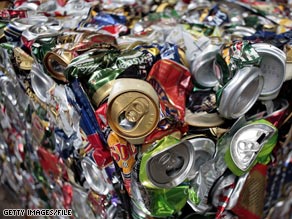
Hyatt has begun recycling its own aluminum, plastics and paper in countries where such programs don't exist.

Consider this fact: In a recent survey, 68 percent of U.S. hotels said they had energy-efficient lights, and two thirds had implemented towel- and linen-reuse programs, up from just over half five years ago.
The number of properties trying to become LEED (Leadership in Energy and Environmental Design) certified, the most recognized standard for building sustainability, is also on the rise: Applications to the U.S. Green Building Council for the award spiked by 550 percent between 2006 and 2008. More than 500 hotels could soon earn the label; until four years ago, only one had the designation.
Although all the major players are making strides toward better green policies, some are doing more than others. Here's what the leaders have achieved in four earth-changing categories:
ENERGY CONSERVATION
Replacing inefficient lighting, one energy-draining bulb at a time
Accor: More than 8,600 Motel 6 locations in at least a dozen states have been retrofitted with occupancy sensors that cause the thermostat to readjust when guests go out.
InterContinental: A trial program has been rolled out at 650 hotels that aims to cut energy consumption by as much as 25 percent. If successful, it could be expanded to all of the chain's 4,000 properties, including Holiday Inns.
Marriott: Over the past decade, 450,000 incandescent bulbs have been replaced with compact fluorescent ones, and more than 250 hotels (including some Residence Inns) have earned an Energy Star efficiency label from the U.S. Environmental Protection Agency.
Starwood: The new Element brand's goal is for every hotel to be LEED certified. Its first property, which opened last year in Lexington, Massachusetts, is fully loaded with Energy Star appliances, LED lighting, and top-notch ventilation systems. All together, that saves enough energy annually to power 236 homes.
WATER CONSERVATION
Tightening up on all the drips and drops in hotel bathrooms
Hilton: The company's aim: to reduce water use at all of its brands, such as Hilton, DoubleTree, and Embassy Suites, by 10 percent by 2014. Its nearly 90 European properties have taken the lead, installing water-saving toilets, showerheads, and faucets over the past three years. Home-turf hotels are next.
Hyatt: Nearly all North American properties have "low-flow" showerheads (which use a maximum of 2.5 gallons of water per minute) and toilets (1.6 gallons of water per flush). The improvements helped reduce the chain's overall water consumption by 3 percent in 2007.
Marriott: Over the past 10 years, the company has added some 400,000 low-flow showerheads and toilets to all of its locations worldwide. Marriott also buys 1 million towels annually that don't require prewashing, conserving 6 million gallons of water each year.
Starwood: All new Element hotels will have low-flow water fixtures in rooms and water-efficient landscaping; its Lexington star has led the way, saving up to 1 million gallons of water per year.
GREEN DESIGN
Thinking about the environment from the foundation up
Accor: The Motel 6 brand broke ground last year on an ultra-green building near Dallas, with laminate flooring made from recycled wood chips and a solar-powered water-heating system.
Best Western: Opening this year in Golden, Colorado, the chain's first LEED-certified hotel will run partially on solar power and have a porous asphalt parking lot to reduce storm-water runoff.
Hilton: The company's green gem is in Vancouver, Washington: a LEED-approved hotel with low-emission paint on the walls and special drains that funnel rainwater into wells for future use.
Hyatt: Seattle's Hyatt at Olive 8, which opened in January, has an 8,000-square-foot rooftop garden, water-efficient dual-flush toilets, outlets in the parking lot for electric cars, and lighting controlled by room key cards.
Marriott: In 2005, the Marriott in College Park, Maryland, was the first chain hotel in the U.S. to become LEED certified. Among the earth-friendly frills: kitchen composting, in-room recycling bins, water pitchers instead of plastic bottles, and an organic restaurant.
Starwood: All eight Element locations being built across the country this year have carpets and cushions made from recycled materials, art mounted on frames constructed from old tires, and priority parking for guests with hybrids.
RECYCLING
Allowing not a single can, bottle, or plastic key card to go to waste
Hyatt: Starting this year, the company will only use key cards and shampoo and lotion containers made from recycled plastics. Hyatt has also begun recycling its own aluminum, plastics, and paper in countries such as Russia and Chile where such programs don't exist.
Intercontinental: As part of a pilot program started two years ago, about 140 Candlewood Suites properties donated old furniture and linens to local families following renovations -- helping to cut back on landfill. It hopes to replicate the initiative nationwide.
Marriott: Each year, the chain buys 47 million pens and 24 million key cards made from recycled plastics; it has also eliminated Styrofoam and plastic utensils at all of its locations. Coming soon: bed pillows made from the polyester fibers of recycled plastic bottles.
Wyndham: Debuting later this year at Super 8 motels across the country: new staff uniforms fashioned entirely from recycled plastic bottles.
Get the best travel deals and tips emailed to you and enter to win a free trip - CLICK HERE!
Copyright © 2009 Newsweek Budget Travel, Inc., all rights reserved.
ATLANTA, Georgia — There’s more to global consumption than meets the eye lately. Spending money for the sake of spending is out. Spending money for a cause is in.
There something in the air, a growing global social conscience. The new global consumer is a discerning one, looking for the purpose behind the brand.
Spending money doesn’t bring the kind of happiness buying with a purpose does. Global trend surveys like the annual “Good Purpose Survey” find only 25 percent of the respondents say shopping makes them happy.
More and more of us would like to become consumers with a with a cause. More than 80 percent say they’re willing to change shopping habits if it will help make the world a better place and 68 percent say they’re willing to stick with a more expensive brand if it serves a cause.
University enrolment in the United States, the world’s biggest consumer nation, is expected to decline for financial disciplines discredited by the global financial crisis, experts say. More and more of America’s young want a career with a purpose. They’re signing up for science and public service seeking to make a difference in the world.
This trend may also be fueled, in part, by a hunger for quality that became apparent the night that unlikely singing sensation Susan Boyle grabbed the world’s attention on “Britain’s Got Talent” with her heavenly voice.
It seems to me that like other forms of consumption, entertainment becomes less frivolous in times like these. Then the question is, how long will this last.
Is consumption with a cause here to stay? We’ll know when the good times come back.
Posted by: CNN Anchor, Ralitsa Vassileva
Filed under: Ralitsa Vassileva
"Our vision is unique:
To provide the tools and resources that make it easier for you to design responsibly.
Searching for reliable, state-of-the-art sustainable materials shouldn’t be a frustrating scavenger hunt around the Internet. Ecolect empowers you with:


